AI Will Replace Developers is One of The Worst Takes on The Internet
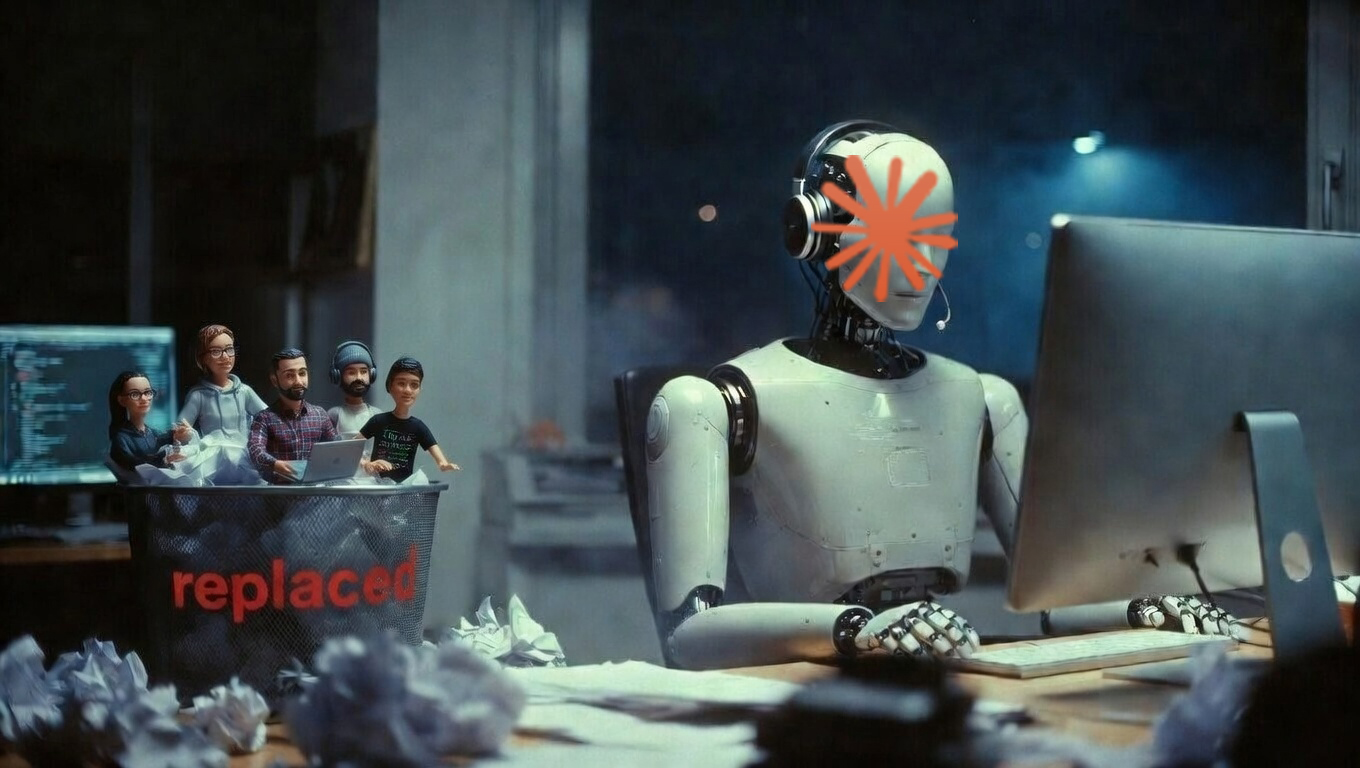
"The opposite is actually happening."
I've been building software for years now. I write code, ship products, debug issues at 3 AM, and deal with the usual chaos that comes with building real things. But something has changed since I started using AI coding tools daily.
And when I look around at what other experienced developers are doing with these tools, I see something completely different from what the headlines are telling us.
So when people say that "vibe coders" will replace professional developers, I see it as one of the most misleading ideas spreading in tech today. Let me explain why.
The Big Misunderstanding
Here's a story circulating online that sounds logical at first:
Non-technical people will learn to build apps using AI. Eventually they'll get so good that they'll replace professional developers who have been coding for decades.
It sounds exciting. It makes for a great headline.
But here's the thing.
What prevents experienced developers from using the same AI tools?
Nothing.
A developer with 15 years of experience doesn't lose their knowledge when they start using AI coding assistants. Instead, their skills get amplified. They still understand architecture, scalability, debugging, security, and system design. AI simply allows them to move faster.
Another thing people ignore: experienced engineers don't just use AI to generate code. They build entire AI-augmented development systems: multiple agents, planning models, automation workflows, and testing pipelines.
So instead of the gap shrinking, it actually becomes bigger. And that's what nobody seems to talk about.
What Happens When Experienced Developers Use AI
I remember a project I worked on last year. We had a complex feature that would have taken our team about three weeks to build the traditional way. With AI assistance, we shipped it in two days.
That's not because the AI wrote everything. It's because I could iterate faster. I could validate ideas quickly. I could offload the boilerplate and focus on the hard parts: the architecture decisions, the edge cases, the integrations that actually mattered.
To people outside the industry, that sounds scary. They immediately think developers will disappear.
But that's not what's happening.
What's happening is that experienced engineers are becoming 10–15× more productive. And they're using that speed to build things that previously weren't even practical.
Not just faster work. Completely new possibilities.
AI Tools Are Not Magic
Social media often shows AI coding like it's effortless. And sure, you can build a small project quickly with AI coding assistants. A simple game or small app might take minutes.
But here's the truth: real software is very different.
Real systems involve:
- thousands of lines of code
- complex architecture decisions
- database design
- authentication systems
- security layers
- deployment pipelines
- monitoring and logging
- payment integrations
- scaling infrastructure
At that level, AI isn't a magic button. It behaves more like a team of very smart engineers who sometimes make confident mistakes. They need supervision, direction, and constant correction.
Managing AI agents becomes its own skill. It's closer to orchestrating a system than writing a simple prompt.
Experienced developers are now shifting from just writing lines of code to acting as Team Leaders for multiple specialized AI agents. Imagine having an agent dedicated to Frontend, another for Backend, one for Unit Testing, and one for DevOps. As the developer, you aren't just a coder anymore; you are the Orchestrator. You assign roles, define the architecture, review their output, and ensure every "team member" is aligned with the project goals.
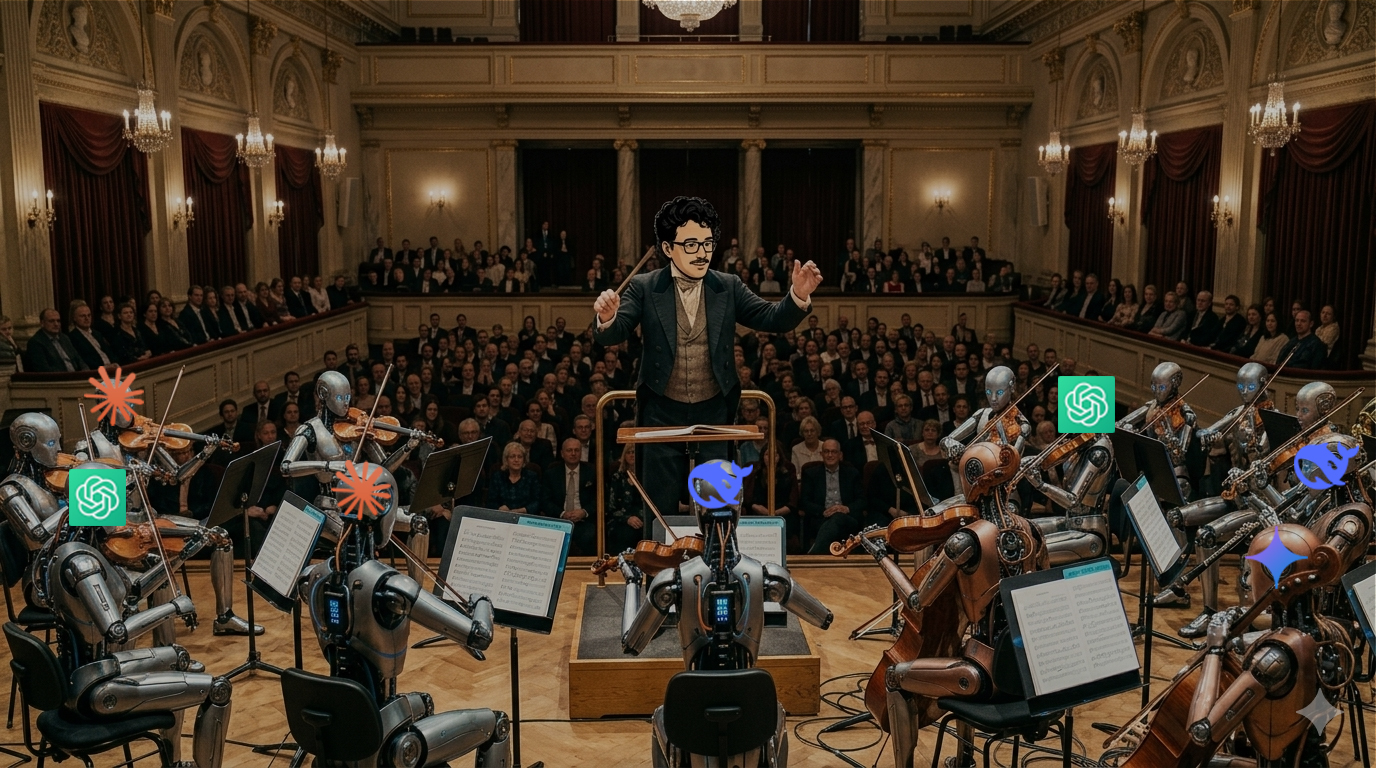
And the people best suited to do that? The developers who already understand how good software should work.
This Has Happened Before
Every time programming became easier, people predicted the end of developers.
When we moved from assembly language to high-level languages, productivity increased massively.
If the current panic logic were correct, programming jobs should have disappeared.
Instead, the opposite happened. Software development exploded.
New industries appeared:
- the internet
- social networks
- mobile apps
- cloud platforms
Every productivity leap created more things to build, not fewer developers.
AI is simply the next step in that evolution.
A New Layer of Infrastructure
Right now we're starting to see something similar with AI agents.
We're entering a world where autonomous software agents interact with services, users, and other agents.
When this scales, we may be dealing with billions of agents interacting across systems.
That creates a massive new layer of infrastructure.
Someone still needs to:
- design architectures
- build secure systems
- create protocols
- implement authentication
- manage infrastructure
- maintain and evolve the ecosystem
What Will Actually Change
Yes, some jobs will disappear. Tasks that were purely repetitive or low complexity will be automated.
But here's the key insight: AI tools are available to everyone.
Once everyone has access to them, the advantage won't be having AI.
The advantage will be knowing how to use it well.
Judgment. Experience. System thinking. Architecture decisions.
Those are still human skills.
The Real Shift
AI represents another level of abstraction in programming.
Just like:
- assembly → C
- C → Python
- local servers → cloud infrastructure
Each transition made development faster and more powerful.
And every time, the demand for developers grew.
AI won't destroy the industry.
It will expand what we can build.
The Global Perspective
Think about this for a second: if we imagine a world where AI actually takes all the jobs in computer science, mathematics, and graphic design, do we really think all those people will just stay jobless?
They wouldn't. They would move to other fields, saturating those markets and potentially breaking the entire global economic structure. The world simply doesn't work that way. Technology has always shifted labor, never completely eliminated the need for human input and specialized knowledge.
The takeaway? Don't panic. Instead, focus on learning the core concepts and principles of your field. And most importantly, don't forget to use AI tools—they are no longer optional, they are essential for staying relevant and productive.
The developers who learn to work with AI will create more products, solve bigger problems, and move faster than ever.
This isn't the end of software development.
It's the beginning of a much larger one.