Why Typing Faster With AI is Destroying Your Architecture
"Developers are generating more code, but accumulating more technical debt."
I spend a lot of time reviewing code and building systems. Over the last year, a disturbing trend has become completely undeniable.
AI has made us incredibly fast at typing. It can generate hundreds of lines of boilerplate in seconds and write complete functions before you even finish thinking about them. But there is a hidden cost that nobody wants to talk about. If you use AI poorly, it actively degrades your architectural thinking and code review quality.
We are moving faster than ever, but we are building weaker foundations.
The Autocomplete Trap
When you use AI simply as an "autocomplete tool," you stop thinking about the system as a whole. You focus on the immediate file in front of you. You accept the logic the model suggests because it looks plausible. It compiles. It runs. So you move on.
But what happens a month later?
The code is brittle. The abstractions don't make sense. The technical debt has compounded so fast that maintaining the project feels impossible. The models aren't malicious. They just lack the context of your entire system architecture. They optimize for completing the next line, not for the structural integrity of your application over the next three years.
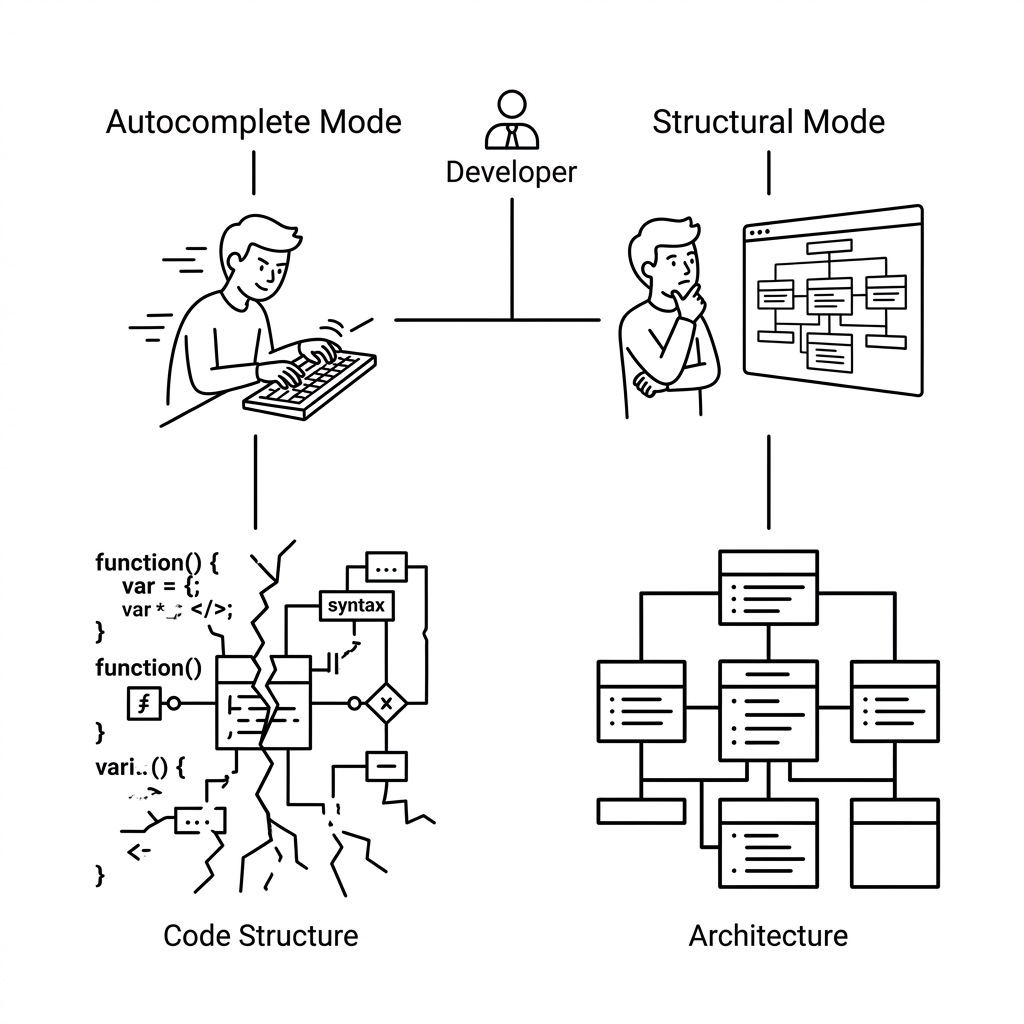
From Autocomplete to Structural Engineering
The key to surviving the AI coding boom is not turning off your assistants. It is changing how you interact with them.
We need to stop using AI to write more code faster. Instead, we need to use it for structural engineering workflows. That means using AI to pressure-test ideas, validate architecture, and enforce rigorous quality standards before a single line of production code is written.
We need to turn our core engineering habits into executable systems.
Executable Habits: Introducing Kata
This exact problem is why I built Kata (型). In Japanese, Kata refers to a practiced form—a sequence drilled until it becomes reflex.
A good engineer does not just write code. They think through requirements, review their own work, debug systematically, design interfaces that feel intentional, and read primary sources. Kata packages these habits into skills that Gemini CLI, Claude Code, and Codex can actually run. Instead of an eager junior developer typing as fast as possible, Kata forces the AI to step back and act like a senior engineer.
1. Pressure-Testing Architecture
Instead of immediately asking an AI to write a feature, you use the /think command. This forces the model to analyze your current system, propose architectural approaches, and pressure-test the design for edge cases and scalability issues before writing any code.
2. Systematic Debugging
When something breaks, the instinct is to ask the AI to fix it quickly. This leads to endless guessing and patched-together solutions. With Kata, you use /hunt. The command instructs the AI to stop guessing. It systematically traces the error, analyzes the logs, and finds the actual root cause of the bug before proposing a fix.
3. Rigorous Code Review
You should never merge AI-generated code without a strict review process. Using /check, Kata performs a rigorous, multi-layered code review. It looks for security vulnerabilities, architectural inconsistencies, and logical flaws that a standard AI generation pass would completely ignore.
4. Continuous Learning and Research
Beyond writing code, true engineers read primary sources and research new domains. Kata provides /read to fetch content as clean Markdown with platform-specific routing, and /learn to dive into unfamiliar domains through a structured six-phase research workflow: collect, digest, outline, fill in, refine, then publish.
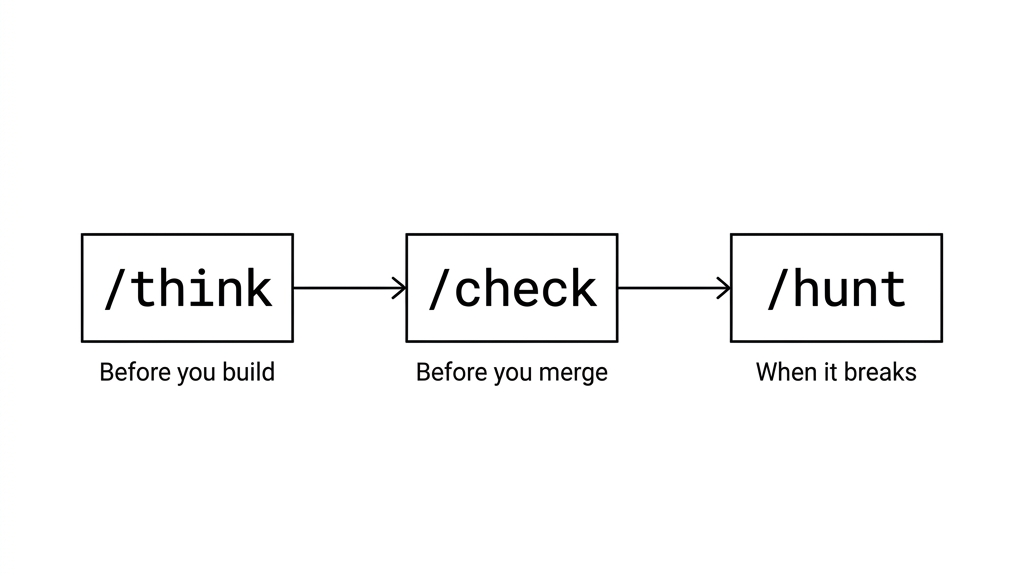
The Workflow Shift
We are past the point where generating code is impressive.
The developers who thrive going forward will be the ones who master system architecture. They will be the ones who build executable systems that enforce quality, rather than just relying on autocomplete to get the job done. Every rule the author writes becomes a ceiling. Kata goes the other direction. Each skill sets a clear goal and the constraints that matter, then steps back. As models improve, that restraint pays compound interest.
Kata is an open-source project built from patterns across real projects. Every gotcha traces to a real failure.
If you are ready to stop accumulating technical debt and start building robust systems, go to the Kata repository on GitHub. Star the project, install the skills, and try /think in your terminal today. It will completely change how you build software.